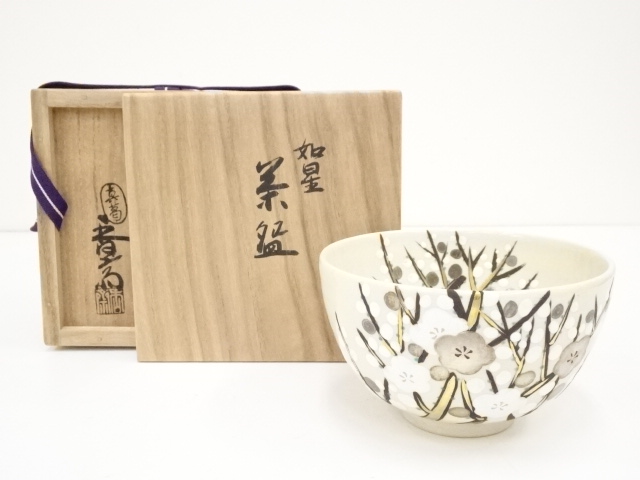
Excellent condition. NOTE : Fragile. This item will be shipped as is (i.e. the same condition it was in when originally purchased from the antique dealer). * Items come with everything pictured (e.g. boxes, accessories, etc. if any).
* Please read through our store policy pages before ordering. Our store primarily sells vintage & antique wares.
Please understand that age affects both item condition and value as a collectible.
Check the condition in each photo carefully to help you decide whether to bid or buy.
If there is anything specific you would like to know about this item, please contact us.
Item Code:6109366
Size (cm)
サイズ
口径
高台径
高さ
縦
横
長さ
12.6
5.3
7.6
?Ask about this item
You must be logged in to ask a question.
Please log in and try again.
[Kosai MIYAGAWA]
A Japanese potter in Kyoto.
The well-known family of Kyoyaki ceramic that has the history since the Edo period. The name “Kosai Miyagawa” has been succeeded from the first generation.
The Miyagawa family was originally from Miyagawamura in north Shiga, and Kohei Miyagawa moved to Kyoto then his son Chihei Masashige opened the tea bawl shop in Gojyo-saka, Kyoto.
First Generation: Kosai (1819-1865)
Born in Kyoto. His art name was Kosai and Akakon.
He started to use the name “Kosai” around 1848-54, and the name has been succeeded after him.
Second Generation (1846-1922)
He was an adopted child of the first Kosai. His real name was Kunajiro and art name were Kosai/Zenou/Chibei (after retirement).
He studied under Chozo Miyagawa who had a kiln in Makuzugahara with Toranosuke ( the first generation of Kozan Kagawa) and other potters.
In 1911 he got a order to create “Ichimonji Goji Utsushi Chawan” for the 650th anniversary of Saint Shinran’s death. He passed down the name of “Kosai” to his oldest son Shuzo and named himself as Chibei after his retirement.
-Third Generation (1894-1919)
The oldest son of the second Kosai. His real name was Shuzo, his art name were Kouai/Koyo. He succeeded the 3rd generation Kosai in 1913.
Fourth Generation (First Generation of Kosai Makuzu) (1897-1987)
The second son of the 3rd generation Kosai. His real name was Kingo, his art names are Kosai/Eiyo/Chihei (after retirement).
He learned pottery at Kyoto Shitei Denshujo and worked with his father after his graduation. He succeeded the 4th generation Kosai in 1913 and Rosanjin Kitaoji visited him to study pottery around 1915.
In 1929, he became a pupil of Souya Hisada, the 11th generation master of house of Usasenke and concentrated on creating tea utensils. He was given the name (or sign which he white on the box of his works) “Makuzuyaki” by Souya Hisada and maned himself as “Kosai Makuzu”.
He passed the name to his son-in-low, Mikishige and used the name “Chihei” after retirement.
Fifth Generation (Second Generation of Kosai Makuzu) (1922-)
Born in Tokyo. His real name was Mikishige, and art names are Kosai/Chihei (after retirement).
He got married to the daughter of the 4th generation Kosai and he succeeded the 5th generation Kosai Miyagawa and the 2nd generation of Kosai Makuzu in 1972.
The stamp of “Makuzu” to impress on the bottom of his works was given him from Sokuchusai Sousa, the 13th generation master of Omotesenke.
In 2002, he passed the name to his adopted son Kazuo and retired. After the death of Souya Hisada, the 11th generation master of house of Usasenke, he created tea utensils with help of the 12th generation master of Urasenke.
Sixth Generation (Third Generation of Kosai Makuzu)(1944-)
Born in Kyoto. He was adopted by the 5th generation Kosai. Real name was Kazuo, and his art name is Kosai.
After he graduated from sculpture department of Tokyo Zokei University he started pottery at kiln in Kyoto. He started to work at Makuzugama in 1976 as an assistant of the 5th generation Kosai and studied under his for 25 years.
He succeeded the 6th generation Kosai and the 3rd generation Kosai Makuzu in 2002, and the stamp of “Makuzu” was given by Myoho Takada, the monk of Daitokuji temple.
Today he mainly creates tea utensils with his son Shinichi with keeping traditional methods and techniques. He has held many personal exhibitions in various places in Japan.
Confirmation
Your question will be posted on the item page.
When answered, it will appear in the "Questions & Answers" section.
If the content is inappropriate, contains personal information, or is deemed unsuitable, it may not be answered or posted.
If everything is okay, please press "Submit".
Submitting...
SALE
JAPANESE TEA CEREMONY / MAKUZU WARE TEA BOWL CHAWAN BY KOSAI MIYAGAWA
Excellent condition. NOTE : Fragile. This item will be shipped as is (i.e. the same condition it was in when originally purchased from the antique dealer). * Items come with everything pictured (e.g. boxes, accessories, etc. if any).
* Please read through our store policy pages before ordering. Our store primarily sells vintage & antique wares.
Please understand that age affects both item condition and value as a collectible.
Check the condition in each photo carefully to help you decide whether to bid or buy.
If there is anything specific you would like to know about this item, please contact us.
Item Code:6109366
[Kosai MIYAGAWA]
A Japanese potter in Kyoto.
The well-known family of Kyoyaki ceramic that has the history since the Edo period. The name “Kosai Miyagawa” has been succeeded from the first generation.
The Miyagawa family was originally from Miyagawamura in north Shiga, and Kohei Miyagawa moved to Kyoto then his son Chihei Masashige opened the tea bawl shop in Gojyo-saka, Kyoto.
First Generation: Kosai (1819-1865)
Born in Kyoto. His art name was Kosai and Akakon.
He started to use the name “Kosai” around 1848-54, and the name has been succeeded after him.
Second Generation (1846-1922)
He was an adopted child of the first Kosai. His real name was Kunajiro and art name were Kosai/Zenou/Chibei (after retirement).
He studied under Chozo Miyagawa who had a kiln in Makuzugahara with Toranosuke ( the first generation of Kozan Kagawa) and other potters.
In 1911 he got a order to create “Ichimonji Goji Utsushi Chawan” for the 650th anniversary of Saint Shinran’s death. He passed down the name of “Kosai” to his oldest son Shuzo and named himself as Chibei after his retirement.
-Third Generation (1894-1919)
The oldest son of the second Kosai. His real name was Shuzo, his art name were Kouai/Koyo. He succeeded the 3rd generation Kosai in 1913.
Fourth Generation (First Generation of Kosai Makuzu) (1897-1987)
The second son of the 3rd generation Kosai. His real name was Kingo, his art names are Kosai/Eiyo/Chihei (after retirement).
He learned pottery at Kyoto Shitei Denshujo and worked with his father after his graduation. He succeeded the 4th generation Kosai in 1913 and Rosanjin Kitaoji visited him to study pottery around 1915.
In 1929, he became a pupil of Souya Hisada, the 11th generation master of house of Usasenke and concentrated on creating tea utensils. He was given the name (or sign which he white on the box of his works) “Makuzuyaki” by Souya Hisada and maned himself as “Kosai Makuzu”.
He passed the name to his son-in-low, Mikishige and used the name “Chihei” after retirement.
Fifth Generation (Second Generation of Kosai Makuzu) (1922-)
Born in Tokyo. His real name was Mikishige, and art names are Kosai/Chihei (after retirement).
He got married to the daughter of the 4th generation Kosai and he succeeded the 5th generation Kosai Miyagawa and the 2nd generation of Kosai Makuzu in 1972.
The stamp of “Makuzu” to impress on the bottom of his works was given him from Sokuchusai Sousa, the 13th generation master of Omotesenke.
In 2002, he passed the name to his adopted son Kazuo and retired. After the death of Souya Hisada, the 11th generation master of house of Usasenke, he created tea utensils with help of the 12th generation master of Urasenke.
Sixth Generation (Third Generation of Kosai Makuzu)(1944-)
Born in Kyoto. He was adopted by the 5th generation Kosai. Real name was Kazuo, and his art name is Kosai.
After he graduated from sculpture department of Tokyo Zokei University he started pottery at kiln in Kyoto. He started to work at Makuzugama in 1976 as an assistant of the 5th generation Kosai and studied under his for 25 years.
He succeeded the 6th generation Kosai and the 3rd generation Kosai Makuzu in 2002, and the stamp of “Makuzu” was given by Myoho Takada, the monk of Daitokuji temple.
Today he mainly creates tea utensils with his son Shinichi with keeping traditional methods and techniques. He has held many personal exhibitions in various places in Japan.
Item Code:6109366
Size (cm)
サイズ
口径
高台径
高さ
縦
横
長さ
12.6
5.3
7.6
?Ask about this item
You must be logged in to ask a question.
Please log in and try again.
Confirmation
Your question will be posted on the item page.
When answered, it will appear in the "Questions & Answers" section.
If the content is inappropriate, contains personal information, or is deemed unsuitable, it may not be answered or posted.