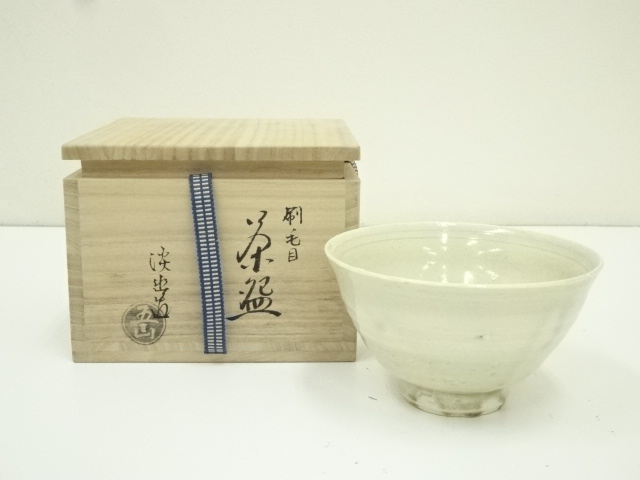
This item will be shipped as is (i.e. the same condition it was in when originally purchased from the antique dealer). * Items come with everything pictured (e.g. boxes, accessories, etc. if any).
* Please read through our store policy pages before ordering. Our store primarily sells vintage & antique wares.
Please understand that age affects both item condition and value as a collectible.
Check the condition in each photo carefully to help you decide whether to bid or buy.
If there is anything specific you would like to know about this item, please contact us.
Item Code:7300170
Size (cm)
サイズ
口径
高台径
高さ
縦
横
長さ
14.2
5.6
8.2
?Ask about this item
You must be logged in to ask a question.
Please log in and try again.
If you haven't signed up to our site, click here to do so.
[Seto ware]
Seto ware is a type of Japanese pottery produced in and around the village of Seto in Aichi Prefecture. Seto was one of the Six Ancient Kilns of Japan.
The first pottery in Seto produced in the 13th century, and Seto was the only area where produced glazed ceramics in medieval times of Japan.
Katō Shirōzaemon is credited as the first potter to produce Seto ware. He brought methods of glazed ceramics from China in Kamakura period, and he started the production of ceramics glazed with iron glaze and ash glaze in Seto. In Momoyama period (1337–1573), Seto potters produced more tea utensils along with the development of tea ceremony.
Seto ware has various kinds of glazes; ash glaze, iron glaze, Kiseto(yellow), Setokuro(black), Shino, Oribe and Tetsu-aka.
[Oribe ware]
One style of Japanese pottery created in Mino area in Gifu prefecture between the end of 16th century and the early 17th century. One kind of Mino ware.
The history had began in the and of 16th century when Oribe FURUTA, a Japanese feudal lord and a tea master who was a discipline of Sen no Rikyu let potters create tea utensils in his favor. Potters created his favored tea utensils which had unique shapes and paintings. Oribe ware was quite eccentric and original at that time because generally the style of Oribe is deformed and polygon.
The major color of Oribe ware is black, deep green and red. They are decided into Oribe kuro (or Kuro(black) Oribe), Ao(blue) Oribe, Aka (red) Oribe, Shino Oribe and so on depends on color of glazes and other characteristics.
Most of Oribe Kuro (Kuro Oribe) products are chawans, and other Oribe ware are mostly table wares.
[ Hake-me ]
Decorative technique for ceramics.
Kaolin (white clay) is painted over with a brush, leaving brush marks ("hake-me" in Japanese) on the surface of the item. A transparent glaze is then applied.
Confirmation
Your question will be posted on the item page.
When answered, it will appear in the "Questions & Answers" section.
If the content is inappropriate, contains personal information, or is deemed unsuitable, it may not be answered or posted.